

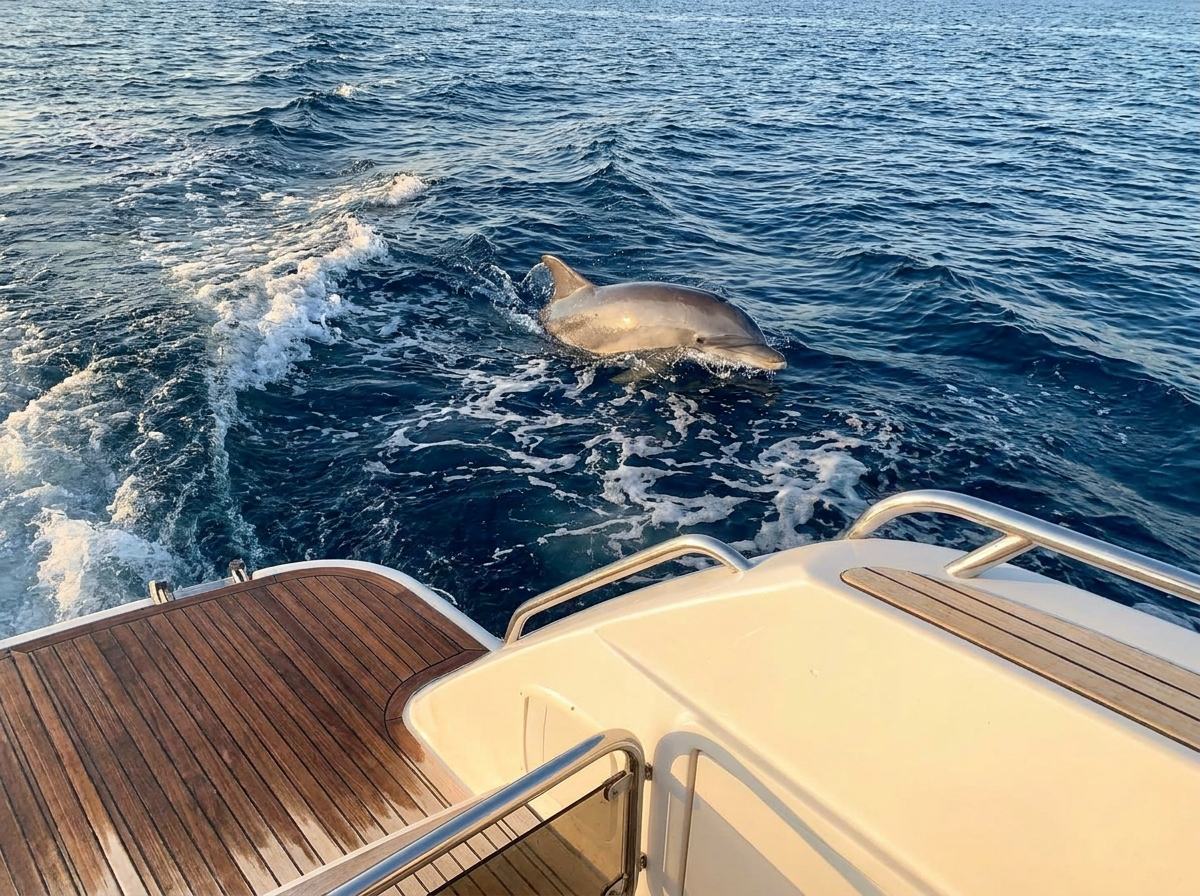
A well-surveyed yacht is a cleaner yacht.
Every vessel lives in the water — and the condition of her hull, her systems, and her machinery directly shapes the health of the oceans, rivers, and lakes she sails.
Surveys protect the water, not just the wallet.
A yacht's bottom paint, her bilge, her sanitation and fuel systems, and the integrity of her hull don't just affect her value or safety — they decide what leaches, weeps, or spills into the water around her. A thorough survey is, quietly, an act of stewardship for every harbor, bay, and shoreline a vessel touches.
That's why every report we produce includes a dedicated eco-flag section that assesses the vessel's environmental condition alongside her structural and mechanical fitness. We flag the issues that matter to the water — and explain what keeping the boat up to date actually does for the ecosystems beneath her.
This isn't marketing. It's methodology. The eco-flag section is built into our standard survey template and completed on every vessel, at no additional cost.
What we check — and why it matters to marine life
Bottom paint & anti-fouling
The single biggest water-quality issue on a hull. We identify outdated or biocide-heavy coatings (the old copper and tin-based paints that harm marine life), assess coating condition, and flag when a switch to a hard or eco-friendly antifouling would protect the seabed beneath the slip.
Bilge, fuel & oil containment
A weeping stern-tube, an oil-soaked bilge, or a corroded fuel tank doesn't stay on the boat — it reaches the water with the first rain or pump-out. We check containment integrity so hydrocarbons never reach the harbor.
Black & grey water systems
Sanitation systems, holding tanks, and Y-valves are checked for illegal overboard discharge paths. A correctly maintained MSD keeps sewage out of swimming and shellfish waters — and keeps the owner compliant.
Exhaust & emissions
We assess exhaust condition and engine efficiency — smoky, poorly tuned engines don't just waste fuel, they leave a sheen and soot on the water. Catching it early protects air and water quality in the anchorage.
Hull integrity
A sound hull means no slow ingress of toxic products, no osmotic blister chemistry leaching from the laminate, and no risk of a fuel or chemical spill from a failure that a survey would have caught.
Keeping boats up to date
The cleanest boat is a well-maintained one. A vessel kept current on her coatings, seals, and systems sheds far less into the water — and our surveys give owners the prioritized plan to get there and stay there.
The life a clean hull protects
Every finding we write has a quiet beneficiary beneath the waterline. The real animals are out there, beneath every hull we survey.
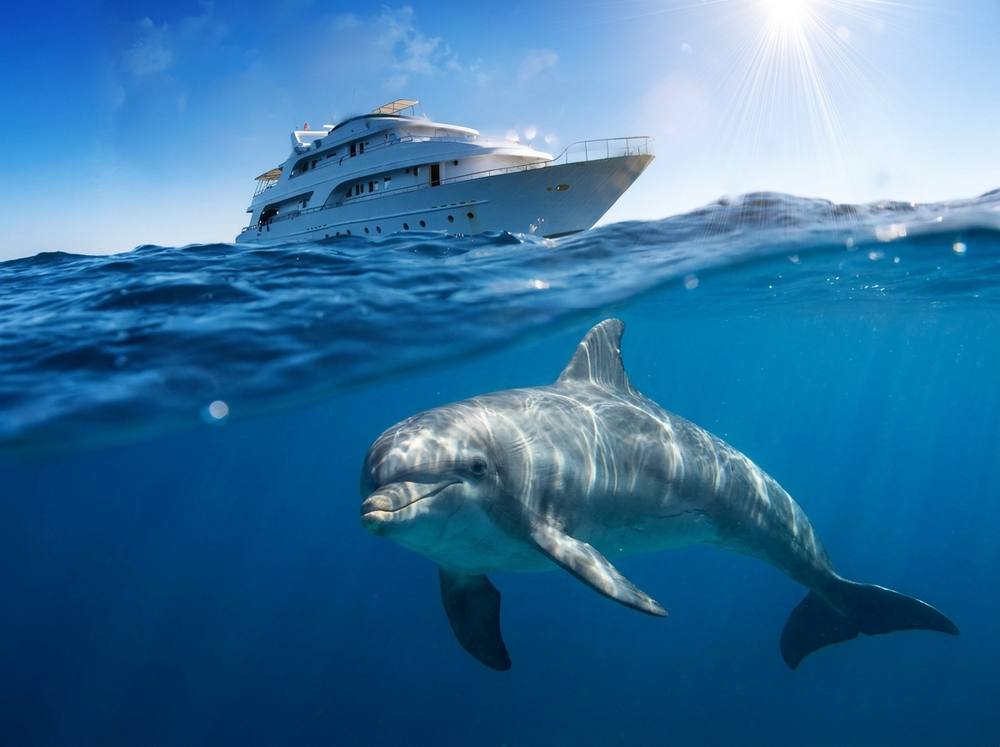
Dolphins & yachts
Protected from fuel sheens and contaminated runoff when hulls and bilges are sound and coatings are up to date.
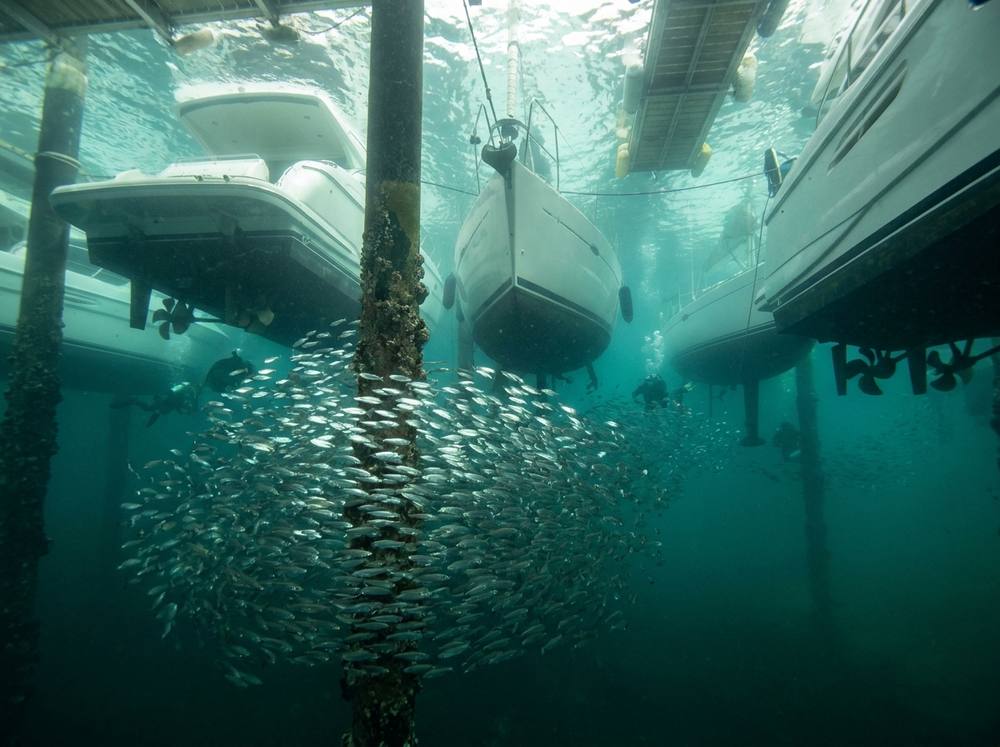
Marina marine life
Seagrass grazers safeguarded when anti-fouling chemistry is modern and discharge systems are intact.
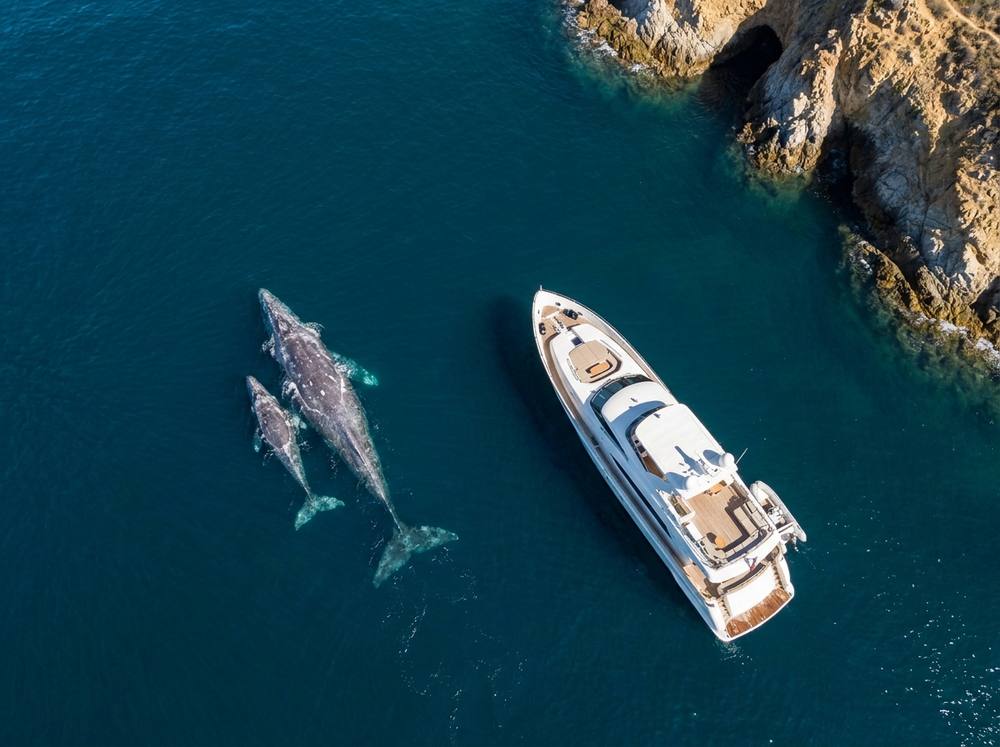
Whales & yachts
Filter feeders that benefit directly from clean, well-maintained vessels sharing their open water.